How I wish I was there
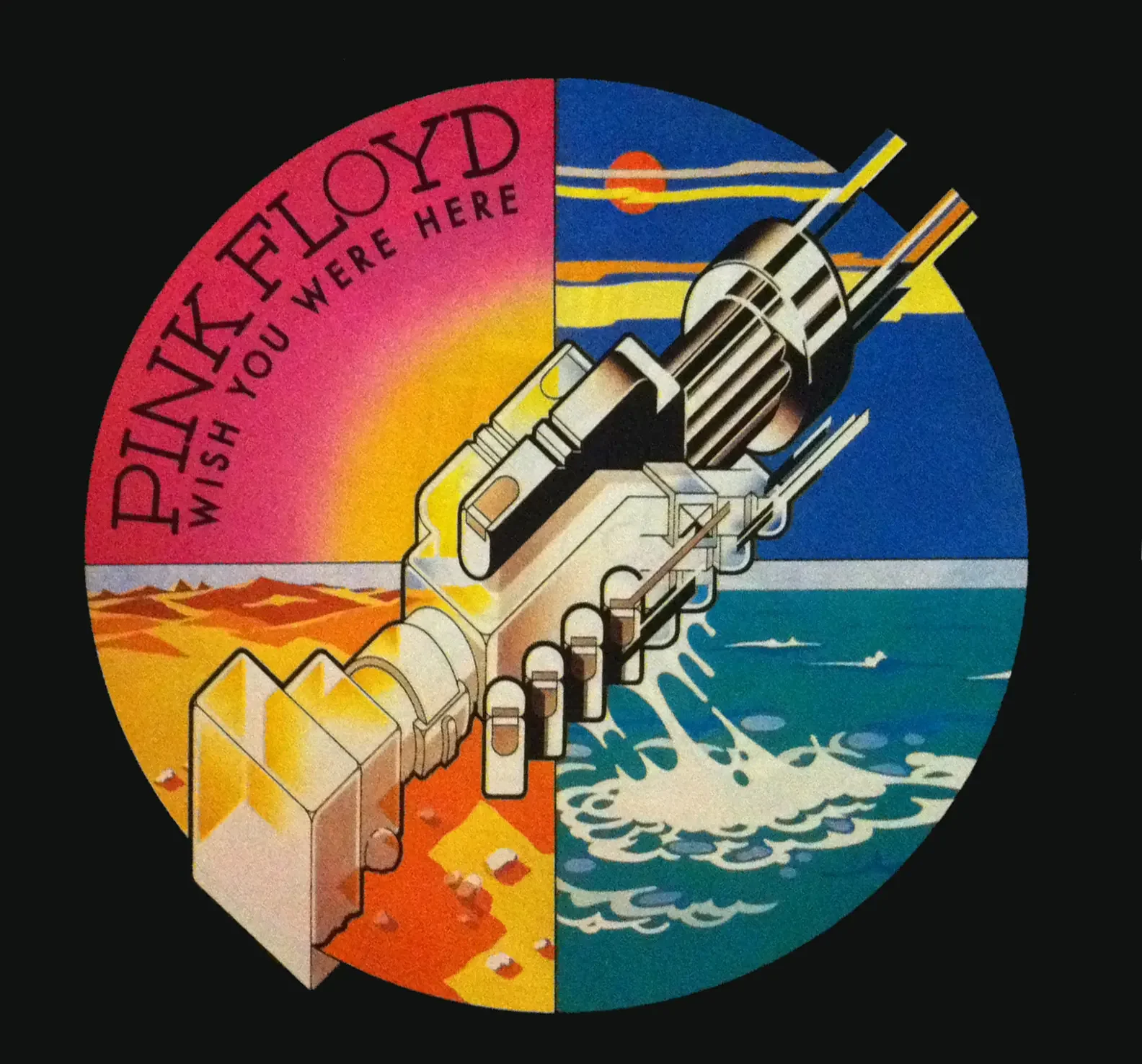
I’ve always found the opening few seconds of Pink Floyd’s album track 'Wish You Were Here' utterly captivating. There’s something about the sound of a hand turning the dial of an old radio, skipping through stations, catching half-sentences, fractured music, the occasional jingle, and static. I'm a radio amateur, and so I guess that it's inevitable I feel like that!
When the song begins to tune itself in - David Gilmour’s guitar line emerges from the background as if it were one of those tuned in tracks -it always makes me pause. It almost materialises out of the background until it slides in to the song.
Why does it hit me like this? Perhaps because as I grow older, the presence of those flickering sounds reminds me of a time when information was found by exploration, not algorithm. Listening to distant radio stations was discovery, not delivery; you couldn't actually guarantee what you would hear beyond the stations in your immediate geographical area. A time before the Internet flattened the unexpected and before Spotify let you skip the stuff that you just don't care for.
There’s a warm anonymity to the old, analogue tuning process. You never knew what was coming next - news, nonsense, or Nina Simone. That era, that method of encountering the world, has largely gone. Tuning is an act of patience. Listening, a discipline. The dial, an interface that required both dexterity and attention. In today’s mouse-click and swipe-right society, such rituals are museum pieces.
But back to Floyd. That iconic sequence at the start of Wish You Were Here was, fittingly, captured via an actual car radio playing in the studio. The band recorded snippets of real radio broadcasts - voices, jingles, station IDs - and overdubbed them with a solo Gilmour playing what would become the haunting acoustic motif of the track. That’s part of why it feels so authentic. It is authentic.
Now, to the mystery. What’s said in those ghostly fragments as the radio flicks across the dial? If you listen closely, there’s music, chatter, and then -just before the guitar solidifies - there's a little bit of music and then you hear a DJ say something that has sparked confusion for years. Many swear the last word is “Schuman”. But, spoiler alert: it isn't.
According to various sources, what’s actually being said is:
“...which is from our album 'Wish You Were Here'...”
Not Schuman. Not the name of the German composer Robert Schumann, nor of the physicist Winfried Otto Schumann of 'resonance' fame. It's just the slightly buried voice of DJ Jim Ladd (or another US radio announcer) previewing the track being played.
Still, I understand why people want it to be "Schuman". To me it jut feels 'right'. Something that ties the ephemeral resonance of shortwave static to Schumann's resonances, or perhaps the melancholia of Romantic composers to the aching nostalgia of this album. "Schuman" feels like it SHOULD be there. Because "Schuman" feels like a transmission from a deeper frequency, a codeword slipped through the static of time, accidentally poetic. A beautiful mistake. The sort of thing old radios excelled at.
In a world where everything is on-demand and immediate, I sometimes miss the near-miss. The almost-clarity. The world where you strained to hear through the noise, where you tuned in rather than clicked. The era when music had to be chased down.
Sometimes I think we're not just missing people, or places, or times—we're missing a whole way of listening. In fact, those of us of a certain age are missing a whole way of life.
And I guess that’s why Wish You Were Here still works. It doesn’t just ask if someone is missing. It makes you feel the ache of what’s gone.
Even if what’s missing is just the word “Schuman”.